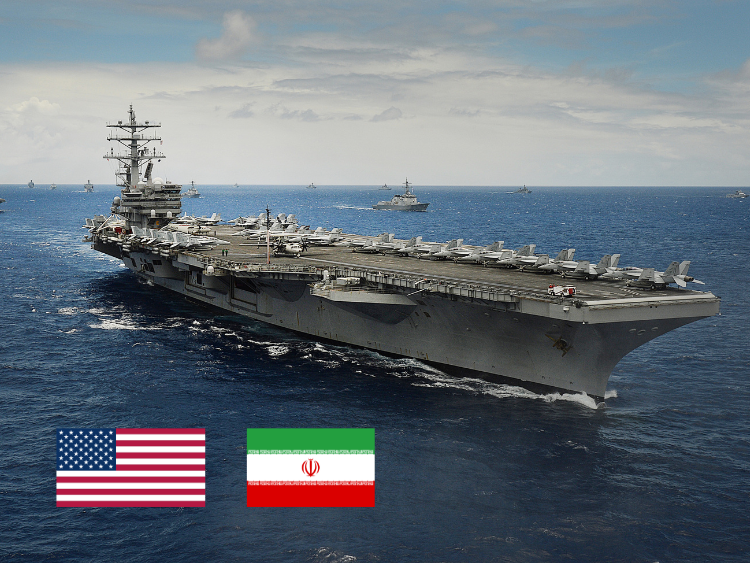
The Middle East entered a new and deeply uncertain chapter over the weekend when the United States and Israel launched a sweeping joint military campaign against Iran. What had been months of escalating tension suddenly became all-out conflict — and global markets are already feeling the shockwaves.
How We Got Here
The seeds of this crisis were planted in late December 2025, when massive nationwide protests erupted across Iran. Fueled by a collapsing economy, surging inflation, and the continued devaluation of the rial, demonstrators took to the streets in over 100 cities — the largest anti-government uprising Iran had seen since the 1979 revolution. The regime’s response was brutal. Iranian security forces, under orders from Supreme Leader Ali Khamenei, opened fire on crowds across the country, with the death toll estimated anywhere from several thousand to upwards of 30,000 people, depending on the source.
The international outcry was swift. In his State of the Union address on February 24, President Donald Trump called Iran “the world’s number one sponsor of terror,” accused the regime of reviving its nuclear weapons program, and warned that the United States was prepared to act. Behind the scenes, U.S. and Israeli forces had already begun moving assets into the region. Indirect nuclear talks mediated by Oman quietly collapsed.
Then, on February 28, 2026, the strikes began.
Operation Epic Fury
The joint U.S.-Israeli operation — codenamed “Epic Fury” by the Pentagon — targeted military infrastructure, command-and-control facilities, ballistic missile sites, and senior leadership. In a watershed moment, Supreme Leader Ayatollah Ali Khamenei, who had ruled Iran for over 35 years, was killed. Iran’s Revolutionary Guards commander and other top security officials also perished in the strikes. U.S. B-2 stealth bombers reportedly struck ballistic missile facilities, and CENTCOM stated that over 1,000 targets had been hit across the country.
Iran struck back. Tehran launched waves of missiles and drones at Israel and at Gulf states hosting U.S. military bases — including Bahrain, Kuwait, Qatar, Saudi Arabia, and the UAE. Several tankers near the Strait of Hormuz came under attack. Internet connectivity inside Iran fell to just 4% of normal levels amid the fighting.
As of Monday morning, the conflict is now in its third day. At least 555 people have been killed inside Iran, four U.S. service members have died, and President Trump has warned that more American casualties are likely. He suggested the campaign could last roughly four weeks. Iran, for its part, has launched strikes against 27 U.S. military bases across the region and shows no sign of backing down — though there are early signals that new Iranian leadership may be open to negotiations.
Why Defense Stocks Are Moving
While the broader market is selling off — the S&P 500 dropped 1.1% on Monday, following losses in Europe and Asia — the defense sector is a notable bright spot. The iShares U.S. Aerospace & Defense ETF had already gained 14% year-to-date before this weekend’s escalation, and the rally has only accelerated since the strikes began.
The logic is straightforward: conflicts of this scale drive immediate demand for precision-guided munitions, missile defense systems, and advanced aircraft — precisely the products that major U.S. defense contractors specialize in. Beyond the near-term boost, NATO countries and U.S. allies across Europe have been steadily increasing their defense budgets throughout 2025 and into 2026, providing a structural tailwind that predates the current crisis entirely.
For investors looking for exposure to the defense sector as this situation develops, here are three stocks worth keeping on your radar.
1. Lockheed Martin (NYSE: LMT)
Lockheed Martin is the world’s largest defense contractor by revenue, and it has been one of the clearest beneficiaries of the current conflict. Shares rose approximately 4.6% in Monday’s premarket session, and the stock has gained roughly 14.9% in 2026 as investors price in elevated demand for missile defense systems, fighter aircraft, and precision-guided munitions.
What makes Lockheed particularly compelling right now is the role its flagship product has played in the conflict itself. The F-35 fighter jet has reportedly been central to U.S.-Israeli strike operations against Iran — real-world performance that serves as an extraordinarily powerful advertisement for future procurement. The company’s portfolio is also unusually well-diversified across the categories most relevant to a conflict of this kind: air and missile defense, tactical aircraft, advanced electronics, and space systems.
Lockheed’s stock had been relatively subdued through much of 2024 and early 2025, as some analysts worried the Pentagon was pivoting toward lower-cost autonomous systems. But the Iran conflict has put those concerns to rest, at least for now. With active combat operations ongoing and a potential four-week campaign ahead, investors are betting that Lockheed’s order pipeline is about to get considerably more active.
2. Northrop Grumman (NYSE: NOC)
If Lockheed Martin is the name most associated with the F-35, Northrop Grumman is the company that owns the stealth bomber space — and that has made it a major winner in this environment. Shares rose approximately 3–5% in Monday’s premarket trading, and the stock has surged roughly 46% since the U.S. first struck Iranian nuclear facilities last June.
Northrop’s core businesses — stealth bombers, drones, missiles, and radar technology — are exactly what a high-intensity conflict against a sophisticated adversary demands. The B-21 Raider stealth bomber program is among the most strategically significant weapons programs in the U.S. arsenal, and the Iran conflict has only reinforced the case for that investment. Its drone and radar divisions are also seeing renewed interest as the military evaluates lessons learned from the ongoing strikes.
Northrop is also benefiting from the broader global arms race that predates the current conflict. European defense budgets have expanded significantly, creating demand for advanced systems across allied militaries. The company’s structural shift toward long-term service and maintenance contracts — rather than one-time hardware sales — also makes its revenue stream more predictable and resilient over time, a quality that investors tend to reward during periods of uncertainty.
3. RTX Corporation (NYSE: RTX)
Formerly known as Raytheon Technologies, RTX climbed roughly 4% in Monday’s session, and for good reason. The company is one of the world’s leading producers of missile defense systems and precision-guided munitions — precisely the hardware being consumed at a significant rate in the current conflict.
RTX’s Patriot missile defense system and its Stinger and Javelin missile products have become household names over the past several years of elevated global conflict, and the company’s order books have reflected that demand consistently. The Iran conflict adds another layer of urgency: as Iran launches retaliatory drone and missile strikes at U.S. bases and allied nations across the Middle East, demand for the kind of point-defense systems that RTX specializes in has never been higher.
What makes RTX particularly interesting for investors is that it operates at the intersection of defense and aerospace — meaning it benefits from defense spending booms while also carrying commercial aviation exposure. In a conflict scenario, the defense side of the ledger dominates, and RTX’s missile and sensor businesses are well-positioned to capture a meaningful share of any supplemental military appropriations that Congress authorizes in the weeks ahead.
A Word of Caution
Defense stocks have historically followed a recognizable pattern during geopolitical crises: conflict escalates, stocks surge, enthusiasm wanes, and volume fades as the situation stabilizes. The current conflict will likely follow a similar arc. If Iran’s missile forces are significantly degraded in the coming weeks, some analysts caution that it could reduce near-term demand for certain conventional military equipment.
Longer term, the structural case for defense spending remains strong regardless of how this particular conflict resolves. But investors should be clear-eyed about the difference between a near-term sentiment trade and a long-term thesis. The situation in the Middle East remains deeply fluid, and as always, it’s wise to consult a financial advisor before making any investment decisions.
That said, for those already watching the defense sector, Lockheed Martin, Northrop Grumman, and RTX are three names that deserve a close look right now.