In the dynamic world of options trading, volatility is pivotal in determining the pricing and risk associated with option contracts. A deep understanding of volatility is crucial for traders to make informed decisions and manage risk effectively. In this blog, we will tackle the concept of vega and how it relates to implied volatility and other Greeks.
What Is Vega in Options?
Vega is one of several “Greeks” used to analyze the options market. It represents an option price’s sensitivity to changes in volatility. In other words, it measures the extent to which an option’s price will fluctuate if there’s a change in the implied volatility (IV) of the underlying asset.
This Greek measures the amount of increase or decrease in premium based on a 1% (100 basis points) change in the implied volatility assumption. Longer-term options have higher vega and are more expensive, with a 1% change in implied volatility representing a larger premium than options with lower premiums.
As an option gets closer and closer to expiration, the vega decreases. The further out in time, the more vega impacts the price of an option.
| Key Takeaways: Vega is a measure of an option’s sensitivity to volatility changes.Other options Greeks can also influence vega. Implied volatility reflects the market’s expectations about future volatility.Traders can use vega and implied volatility to assess and manage option risk and develop better strategies.Higher vega means higher sensitivity to volatility. |
Real-Life Example of Using Vega
Here’s an example of how to use vega in options trading:
- Current Stock Price: $175 (Apple)
- Option type: Call
- Expiration date: December 23rd
- Implied volatility: 40%
- Starting option premium: $3.88
- Vega: 0.10
This means that for every one-point increase in implied volatility, the option’s price will increase by 10 cents. So if implied volatility rises to 41%, the option’s price could potentially increase to $3.98. On the other hand, if implied volatility falls to 39%, the option’s price could potentially decrease to $3.78.
The practical application of vega has also been evident in history. Let’s consider two of them:
- The 2008 Financial Crisis
During the 2008 financial crisis, market volatility surged dramatically. Traders who had positions with high vega exposure experienced significant losses. However, they would’ve been able to navigate the crisis more effectively had they implemented appropriate risk management strategies. Traders who accurately assessed vega’s impact on their positions had a better chance of avoiding big losses.
- The COVID-10 Pandemic
The pandemic caused unprecedented market volatility and led to a surge in vega for many options contracts. Traders who were able to accurately assess implied volatility and adjust their positions accordingly were able to capitalize on the market’s fluctuations.
Vega Trading Strategies and Portfolios
Vega is a valuable tool for creating volatility-focused trading strategies and managing option portfolios. Here are some key strategies and considerations:
Volatility Arbitrage
This strategy involves exploiting discrepancies between the implied volatility of similar options. Traders can identify options with undervalued or overvalued implied volatility and create positions that profit from the convergence of these discrepancies.
Volatility Targeting
Traders can use vega to construct portfolios that target specific levels of volatility. This allows them to manage risk and exposure to volatility fluctuations.
Vega-Neutral Portfolios
By combining options with opposing vega exposures, traders can create vega-neutral portfolios. This helps reduce the overall sensitivity of the portfolio to changes in volatility.
Option Hedging
Vega can be used to hedge existing positions against volatility risk. For example, a trader holding a long position in an underlying asset can buy a put option to protect against a price decline. The put option’s vega can be useful in mitigating potential losses resulting from a decline in the underlying asset’s price.
How Does Vega Work With Other Greeks?
Vega is closely intertwined with other option Greeks.
Delta, the rate of change of an option’s price concerning the underlying asset’s price, can indirectly impact vega. A higher delta means the option’s price is more sensitive to changes in the underlying asset price, which can lead to greater volatility sensitivity.
Gamma, the rate of change of delta over time, also influences vega. A higher gamma implies that the option’s delta is more volatile, which can increase the option’s sensitivity to changes in volatility.
Theta, the time decay of an option’s premium, can affect vega. As an option approaches expiration, its theta increases. This can lead to a decrease in vega since time decay reduces the option’s potential for large price movements.
Rho, the sensitivity of an option’s price to interest rate changes, can also have an impact on vega. For long-term options, a higher rho can increase vega.
What Is Implied Volatility?
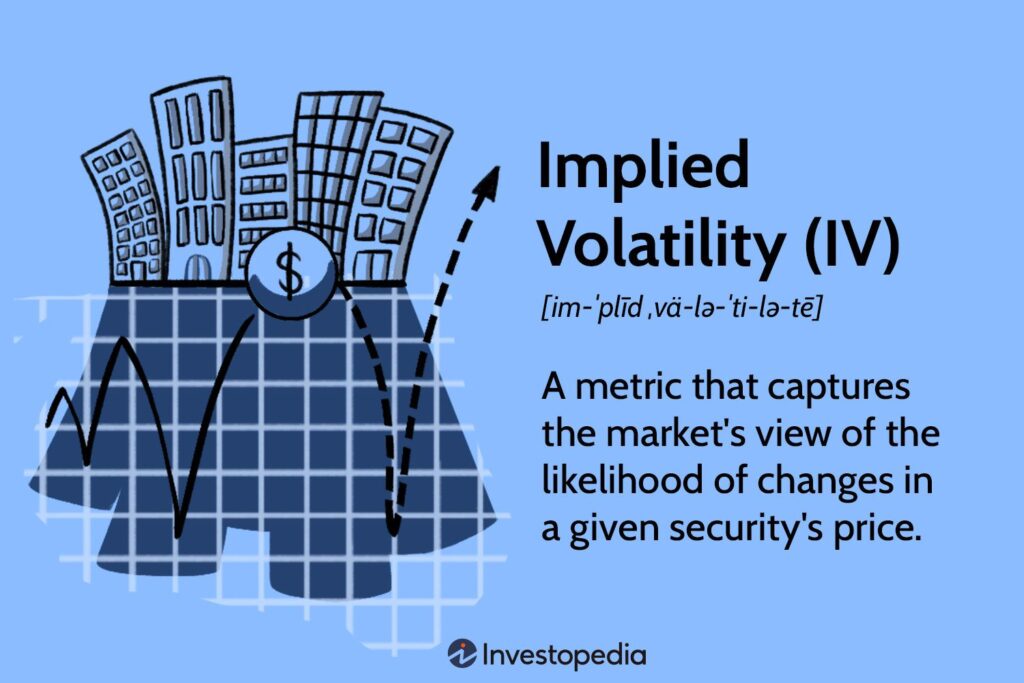
Implied volatility tells us the market’s expectations about future price movements of an underlying asset. Traders use implied volatility to assess the market’s risk pricing. A higher IV indicates that the market expects greater price changes in the underlying asset.
Traders can also use IV to identify potential trading opportunities. For example, if IV is significantly higher than historical averages, it may suggest that the market is overreacting to recent events. In such cases, traders might consider selling options, expecting IV to revert to its mean.
IV is mean-reverting, meaning it will always find its average after experiencing significant deviations. However, take this information with a grain of salt because IV might not always be perfectly mean-reverting.
Here’s another example of how to use implied volatility to find potential profitable trades. In this video, our CEO, Scott Bauer, used Apple as an example to demonstrate. The current implied volatility for Apple options is 40%, so the market expects Apple’s share price to move up or down by about 40% over the next year.
Vega vs Implied Volatility: Key Differences
Vega is a component of implied volatility and they should not be confused with each other. Here’s why:
| Vega | Implied Volatility | |
| Definition | A measure of an option’s sensitivity to changes in volatility | A market-wide expectation of future volatility |
| Calculation | Calculated based on the option’s characteristics | Derived from the market prices of options |
| Usage | Used to assess risk and reward associated with an individual option | Used to measure the overall market’s forecast for volatility |
While vega and implied volatility are related, they provide different perspectives on volatility. If traders confuse vega with implied volatility, they might make inaccurate predictions about an option’s price movement or it can impact their strategies, so it’s important to take note of these key differences for successful options trading.

In-Depth Analysis of Specific Trading Strategies
Let’s discuss some popular trading strategies that leverage vega, Greeks, and implied volatility:
Covered Calls
This strategy involves selling a call option against a long position in the underlying asset. While the vega covered call is generally negative, it can also offer opportunities for generating income and potentially limiting downside risk. If the underlying asset’s price remains stable or declines, the option seller can keep the premium received from selling the call.
Protective Puts
A protective put involves buying a put option to protect a long position in the underlying asset. The protective put’s vega is generally positive, as the option buyer benefits from higher volatility. This strategy can be useful to limit downside risk, especially during periods of market uncertainty.
Straddles
Vega can have a significant impact on straddles. This strategy involves buying a call and put option with the same strike price and expiration date. The vega of this option strategy is generally high, as it benefits from significant price movements in either direction.
Strangles
A strangle involves buying a call and put option with the same expiration date but different strike prices. The vega of a strangle is also generally high, but it offers a wider range of potential profits compared to a straddle.
Leveraging Vega Today
Traders can leverage vega in today’s market by:
- Using volatility-based indicators, like the VIX (volatility index), to gauge market volatility and adjust their positions accordingly.
- Building portfolios focused on volatility. By combining options with different vega exposures, traders can create portfolios that are more or less sensitive to volatility.
- Testing different options strategies such as covered calls, protective puts, straddles, etc. By doing so, traders can capitalize on volatility-related opportunities.
- Keeping updated on market news and events that could impact volatility. Traders can make better and more informed decisions by understanding the factors that drive volatility.
Closing Thoughts On Vega in Options
Vega has been proven to be a valuable tool when it comes to options trading. While it can be confused with volatility, it’s important to know their differences and how they correlate. Using it to your advantage could help you navigate market volatility and implement better trading strategies.
If you want to learn more, check out our Options Trading For Beginners Cheat Sheet. It’s 100% free, and it will help you put the strategies you learned here into action.