

A renewed sell-off in technology stocks grabbed headlines this week. The Nasdaq index fell 4.5%, closing lower 5 days in a row, led by a large 5.5% decline in the so-called Magnificent 7 mega cap names. Meanwhile, the post IPO exuberance around SpaceX appears to be fading, with shares now down 25% from their peak.
Markets haven’t had many weeks in 2026 like this one. Markets balanced competing forces during the week, including concerns about interest rates, a tech selloff, and a rebound in AI-related stocks following better-than-expected earnings.
However, away from these negative headlines, there was better news. Oil prices are tumbling and economic data remain upbeat. Against this backdrop the broader equity market delivered stronger performance, maintaining the rotation in leadership seen in recent weeks.
Jobs data this week will shed light on the U.S. economy’s strength, which could raise prospects for near-term interest rate hikes, adding potential volatility to a stock market already on edge from swings in technology shares.
The U.S. economy has posted three straight months of solid job gains, with payrolls rising by 172,000 in May. June employment is expected to rise by 110,000 jobs, according to a Reuters poll.
Meanwhile, inflation has remained well above the Fed’s 2% annual target. The central bank said at its latest meeting it was focused on delivering price stability, which investors took as surprisingly hawkish. Data on Thursday showed inflation breaking above 4% for the first time in three years, as the Middle East conflict boosted energy prices (more on that below).
For the week, the Dow gained +0.6% to 51,876, the S&P 500 lost -2.0% to 7,354, the Nasdaq slumped by -4.6% to 25,298 and the Russell 2000 moved higher by +1.0% to 3,010. The CBOE Volatility Index closed higher by +9.7% to 18.41.
Higher And Higher
U.S. inflation increased further in May, breaking above 4.0% for the first time in three years as the Middle East conflict boosted energy prices, and keeping an interest rate increase from the Federal Reserve this year on the table.
The headline Personal Consumption Expenditure price index rose 0.4% on the month, missing the 0.5% expected after April’s 0.4% gain. From a year earlier, it quickened from 3.8% to 4.1%, matching the 4.1% forecast and marking the highest reading since April 2023.
Core PCE, which strips out food and energy, rose 0.3% on the month and the annual rate inched up from 3.3% to 3.4%, matching estimates.
Welcome to the job Mr. Warsh! Markets now price a near-certain 25-basis-point hike in the fed funds rate by October 2026, with a second increase expected by March 2027.
But let’s look at the positive side of this as my glass is always half full. Oil prices have fallen to pre-war levels and many believe inflation has likely peaked. Everyone thinks the price of gas is heading lower.
So why the worry? Any relief at the pump may be offset by rising prices for technology goods like semiconductors and electronics amid an artificial intelligence investment boom. And fertilizer shortages because of the conflict were expected to raise food prices, economists said.

Prior to the war, consumers were struggling with higher prices stemming from President Trump’s sweeping import tariffs. Despite the high inflation last month, consumers boosted their spending, thanks to larger tax refunds this year and higher share prices, which have cushioned some of the pain at the pump. Households are also tapping into savings and saving less. Consumer spending, which accounts for more than two-thirds of economic activity, jumped 0.7% in May after rising 0.4% in April. Some of the rise reflected higher prices.
Where Is The Shine?

Gold has sold off this year as inflation has risen, exacerbated by the conflict in the Middle East, prompting some to question whether gold still acts as an inflation hedge.
While gold is typically viewed as a safe haven during times of crisis, its gains during 2025 made gold holdings an obvious asset for liquidity-hit investors to sell once the conflict in Iran broke out at the end of February. But the selloff didn’t start or end with the conflict in Iran. Its price has continued to fall even as the war appears to hopefully be drawing to a conclusion.
This was underscored following the FOMC’s first meeting under Kevin Warsh with minutes of the meeting indicating that FOMC members have revised their future interest rate projections upwards.
The decline came as the dollar remained pinned at a 13-month high after six straight sessions of gains, supported by increasing bets that the Fed may raise interest rates later this year.
Markets are pricing in a roughly 30% chance of a July rate hike and a 60% probability of tightening by September, according to the CME FedWatch Tool. A stronger greenback makes dollar-denominated gold more expensive for overseas buyers, while higher interest rates raise the opportunity cost of holding bullion, which does not offer yields.
“Gold’s weakness highlights the extent to which markets have shifted their focus from safe-haven demand towards the implications of higher interest rates and tighter financial conditions,” ING analysts said in a recent note.
The latest slide also reflects a broader reassessment of safe-haven demand. Easing geopolitical concerns after progress in U.S.-Iran peace efforts and lower oil prices have reduced some of the risk premium that supported gold earlier this year.
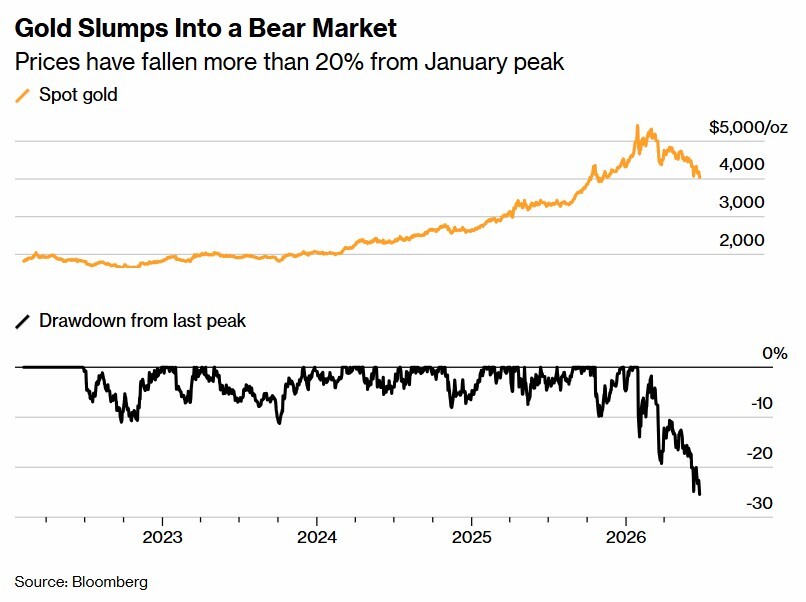
Gold posted double-digit gains for each of the last three years, more than doubling in price as central banks, money managers and retail investors all piled into the trade. That rally ran out of steam in late January, shortly after the precious metal hit an all-time-high near $5,600 an ounce and is now down nearly 30%.
One bright spot for bullion is the continued strength of central-bank demand. The monetary institutions added to their holdings at the fastest pace in more than a year in the first quarter, and survey data indicates they intend to buy more.
Economic Reports of Note (All Times EST):

Monday
10:30 am – US: Dallas Fed Manufacturing Business Index
11:30 am – US: 3 & 6-month Bill Auctions
Tuesday
8:30 am – CAN: GDP
8:55 am – US: Redbook
9:00 am – US: House Price Index
9:45 am – US: Chicago PMI
10:00 am – US: JOLTS
10:00 am – US: Conference Board Consumer Confidence
10:30 am – US: Dallas Fed Services Revenues
1:00 pm – US: 2-year Note Auction
Wednesday
5:00 am – EU: CPI
5:30 am – US: Challenger Job Cuts
7:00 am – US: Mortgage Data
8:15 am – US: ADP Nonfarm Employment Change
9:00 am – US: Fed Governor Warsh Speaks
9:45 am – US: S&P Global Manufacturing PMI
10:00 am – US: ISM Manufacturing PMI
10:00 am – US: Construction Spending
10:30 am – US: Crude Oil Inventories
11:30 am – US: Atlanta Fed GDPNow
11:35 pm – JAP: 10-year JGB Auction
Thursday
8:30 am – US: June Nonfarm Payrolls
8:30 am – US: Weekly Jobless Claims
10:00 am – US: Factory Orders
10:00 am – US: Durable Goods
10:00 am – US: Dallas Fed PCE
11:30 am – US: 4 & 8-week Bill Auctions
Friday
US Markets Closed in Observance of July 4th