
This is the one week the entire Prosper roster is in the same room. Three days at The Wynn Las Vegas Resort – nine coaches, headline guests, live trading, and a floor full of traders leveling up together.
NOBODY LIKES IT
The moves in S&P 500 sectors told the story of the week as traders and investors sought safety while earnings season unfolded: Information Technology tumbled, while Consumer Staples and Health Care rose.
Ballooning artificial intelligence fears sent the Nasdaq tumbling to its worst week since June. Friday’s selloff also spread to software stocks as investors sold popular positions in Big Tech amid the AI carnage. Meta Platforms and Tesla will kick off Magnificent Seven earnings just as AI spending comes under heightened scrutiny.
With government data showing stubbornly high consumer and producer price inflation last week, and heightened tensions in the Strait of Hormuz and between Russia and Ukraine, oil prices shot up 8% last week to near $99 per barrel.
Despite near-term inflation worries, the likely timing of a Federal Reserve rate hike still sits in December, with a roughly 72% probability of a 25-basis-point increase, according to the CME FedWatch tool. The rate on the benchmark 10-year U.S. Treasury moved lower during the week, to near 5.098%, but worries about corporate debt burdens, especially in the tech sector, gripped Wall Street.
That leaves investors now looking ahead to the third quarter earnings season deluge over the next few weeks. A strong underlying earnings story has been one of the primary drivers of Wall Street reaching record levels this year and weathering headwinds from geopolitics to bond auctions.
For the week, the DOW gained +0.7% to 52,002, the S&P 500 fell -2% to 7,659, the Nasdaq tumbled -4.5% to 26,140 and the Russell 2000 again continued to the downside and lost -3.1% to 2,721. The CBOE VIX soared +34.7% to 19.99.
Mitigating Risk During Inflation and Economic Uncertainty
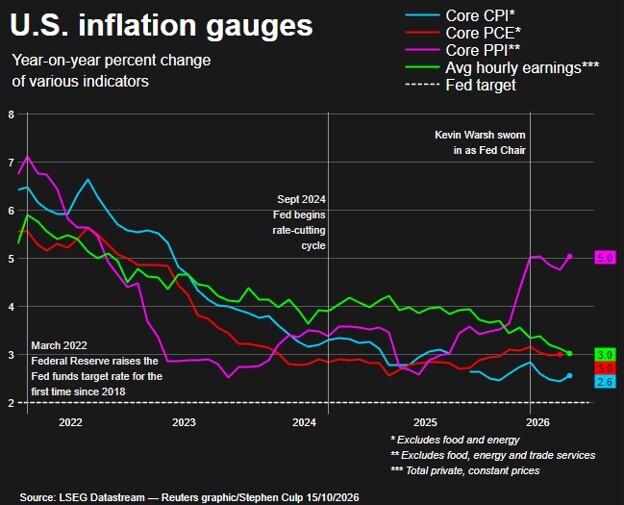
We may be getting closer to winter weather but inflation is getting hotter and hotter. Consumer prices remain elevated but it was the PPI (producer prices) report that is causing us all to sweat. It increased the most in 4 1/2 years amid rising costs for goods and services, the latest indication of inflation broadening out beyond energy products.
When prices rise, the same paycheck, savings account or investment income buys fewer and fewer things than it used to, making inflation a personal finance issue as much as a macroeconomic one.
Inflation reduces your purchasing power. If your income, savings, or investments don’t keep up with rising prices, your money buys less than it did before. So, a savings account may feel safe because the balance doesn’t fall. But if it earns 2% while inflation runs at 4%, the real value of that cash is still declining.
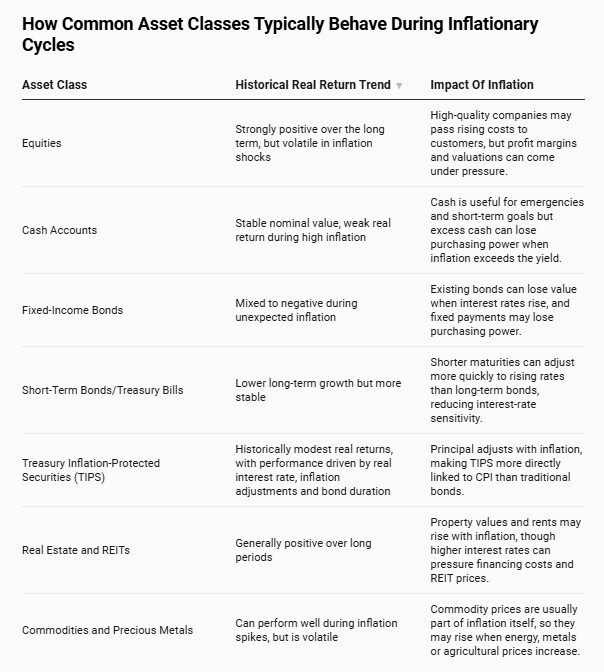
Inflation also affects investments. Companies may face higher wages, materials, rent and borrowing costs, which can pressure profits. Bonds may lose value when interest rates rise (a common government strategy to combat inflation), and fixed payments become less valuable in real terms. That’s why investors often look for assets with a better chance of keeping pace with inflation.
Inflation doesn’t mean you should abandon your investment plan. It just means you should understand which assets are most likely to preserve purchasing power and which are more vulnerable.
Different asset classes respond to inflation in different ways. Some may benefit when prices rise. Others may struggle because their income is fixed or their returns do not adjust quickly enough. Nobody will ever get it perfectly right so it’s typically wise to include a mix of growth, income-producing and real assets and, liquid reserves. Keep in mind that the right mix also depends on your age, time horizon, income stability, risk tolerance and financial goals.
Third Quarter Earnings Season
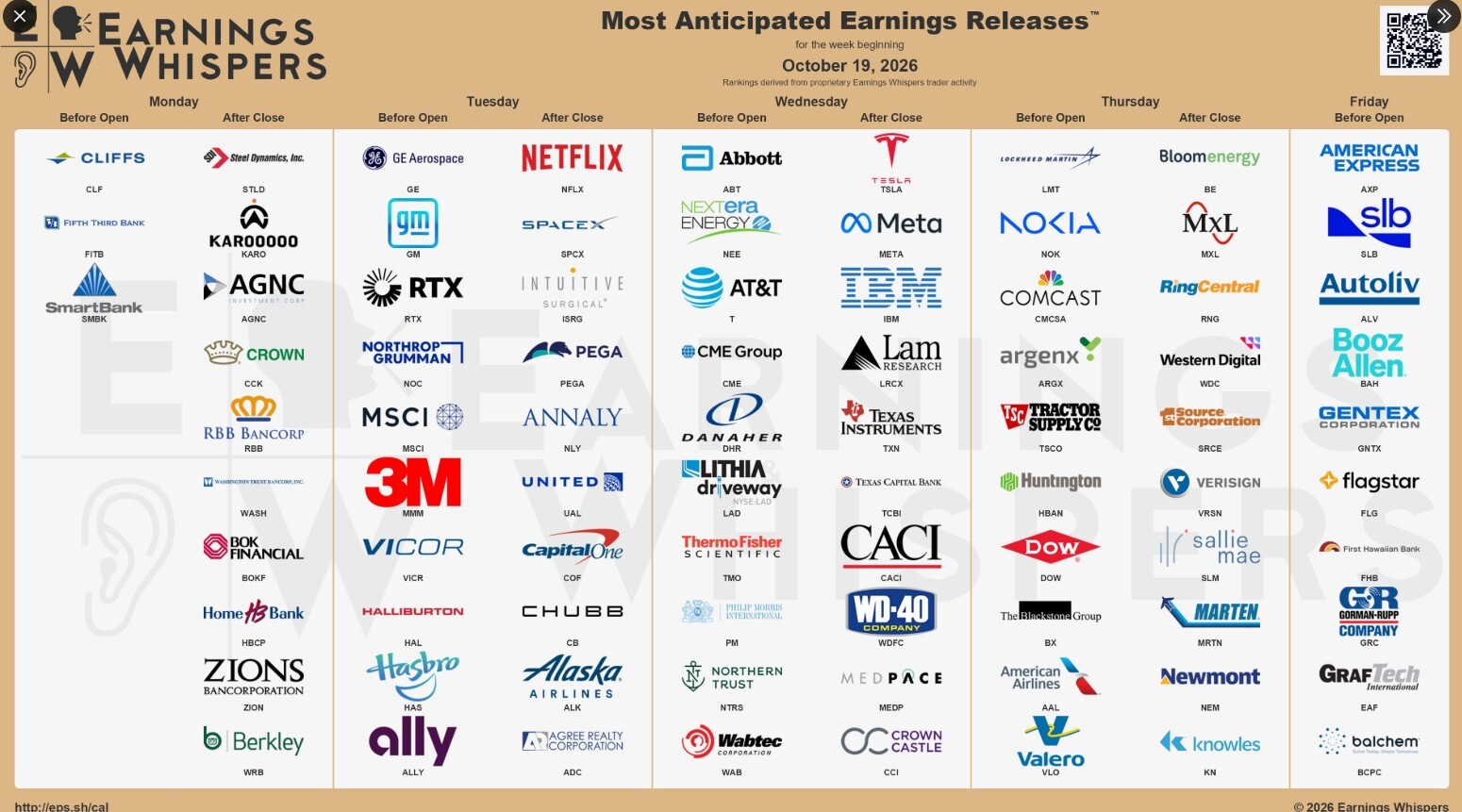
Markets head into this week with a lighter U.S. economic calendar, putting even more attention on earnings.
META KICKS OFF HYPERSCALER RESULTS
US reporting season heats up this week, with investors counting on robust performance. S&P 500 companies are expected to have increased earnings by more than 30% in the third quarter, according to LSEG IBES.
While the S&P 500 remains up about 12% in 2026, most of that gain has come from AI-related tech stocks, and the index’s median component has climbed only about 6%, year to date. About 185 S&P 500 stocks have lost ground in 2026.
Hotter-than-expected consumer and producer inflation reports this week showed price pressures were extending beyond energy commodities.
Meta is one of five AI hyperscalers that combined are expected to increase their capital spending to about $1.2 trillion next year, according to Goldman Sachs. Investors are eager for signs the companies can show returns on the investments, which would build confidence that the spending is sustainable. With the cost of capital rising, the capex blowout will become more expensive which ultimately raises the bar for returns.
“One of the most important takeaways of earnings season is whether or not the profitability of the hyperscalers can grow faster than the pace of their capex,” said Kevin Shea, senior equity analyst at BNY Wealth.
SEMIS, TESLA, NETFLIX ALSO ON TAP
Chip companies have been among the biggest beneficiaries of the capital spending boom, but the stocks have cooled off. The Philadelphia SE Semiconductor index, SOX, has slumped about 12% this month, although it remained up 57% on the year, compared with a roughly 12% year-to-date gain for the S&P 500.
Wednesday’s reports from Lam Research and Texas Instruments could offer broader indications of demand in the semiconductor industry. Lam Research shares are up 54% in 2026, while Texas Instruments stock is up 59%.
Elsewhere, investors will focus on results from Musk-run companies with market values well over $1 trillion: SpaceX — the newly public space company that also has an AI business — and Tesla, another signature stock of the tech-driven bull market.
At this early stage, the third quarter earnings season for the S&P 500 has seen a mixed start relative to expectations. While the percentage of S&P 500 companies reporting positive earnings surprises is above recent averages, the magnitude of earnings surprises is below recent averages. As a result of this mixed performance and downward revisions to EPS estimates for companies in the Health Care sector, the index is reporting lower earnings for the third quarter today relative to the end of last week and relative to the end of the quarter. Despite the decrease in earnings, the index is still reporting (year over year) earnings growth above 25% for the 3rd straight quarter.
Overall, 9% of the companies in the S&P 500 have reported actual results for Q3 2026 to date. Of these companies, 84% have reported actual EPS above estimates, which is above the 5-year average of 78% and above the 10-year average of 77%. In aggregate, companies are reporting earnings that are 2.6% above estimates, which is below the 5-year average of 7.5% and below the 10-year average of 8.0%. Historical averages reflect actual results from all 500 companies, not the actual results from the percentage of companies that have reported through this point in time.
Economic Reports of Note (All Times EST):
Monday
8:30 am – CAN: CPI
11:30 am – US: 3 & 6-month Bill Auctions
Tuesday
2:00 am – UK: PPI
8:15 am – US: ADP Employment Change
8:30 am – US: Housing Starts
8:30 am – US: Building Permits
8:55 am – US: Redbook
10:00 am – US: Pending Home Sales
10:00 am – US: Atlanta Fed GDPNow
Wednesday
2:00 am – UK: CPI
7:00 am – US: Mortgage Data
10:30 am – US; Crude Oil Inventories
1:00 pm – US: 20-year Bond Auction
Thursday
8:30 am – US: Weekly Jobless Claims
10:00 am – US: Leading Index
11:00 am – US: KC Fed Composite & Manufacturing Index
11:30 am – US: 4 & 8-week Bill Auctions
Friday
9:45 am – US: S&P Global Composite, Manufacturing & Services PMI
10:00 am – US: Michigan Consumer Sentiment
10:00 am – US: Michigan 1 & 5 -Year Inflation Expectations