Some intraday volatility returned to the market as treasury yields remained elevated, particularly on the long end of the curve. Investors continued to monitor developments in the Middle East and the new tariff situation with Canada.
Equity investors have been taking their cues from the direction of U.S. government bond yields in recent sessions as the prospect of higher borrowing costs dampened risk appetite. Despite these concerns, volatility remained relatively subdued, with the VIX falling to an eight-month low during the week, suggesting investors have grown increasingly comfortable with both the macro backdrop and geopolitical risks, before moving higher to end the week.
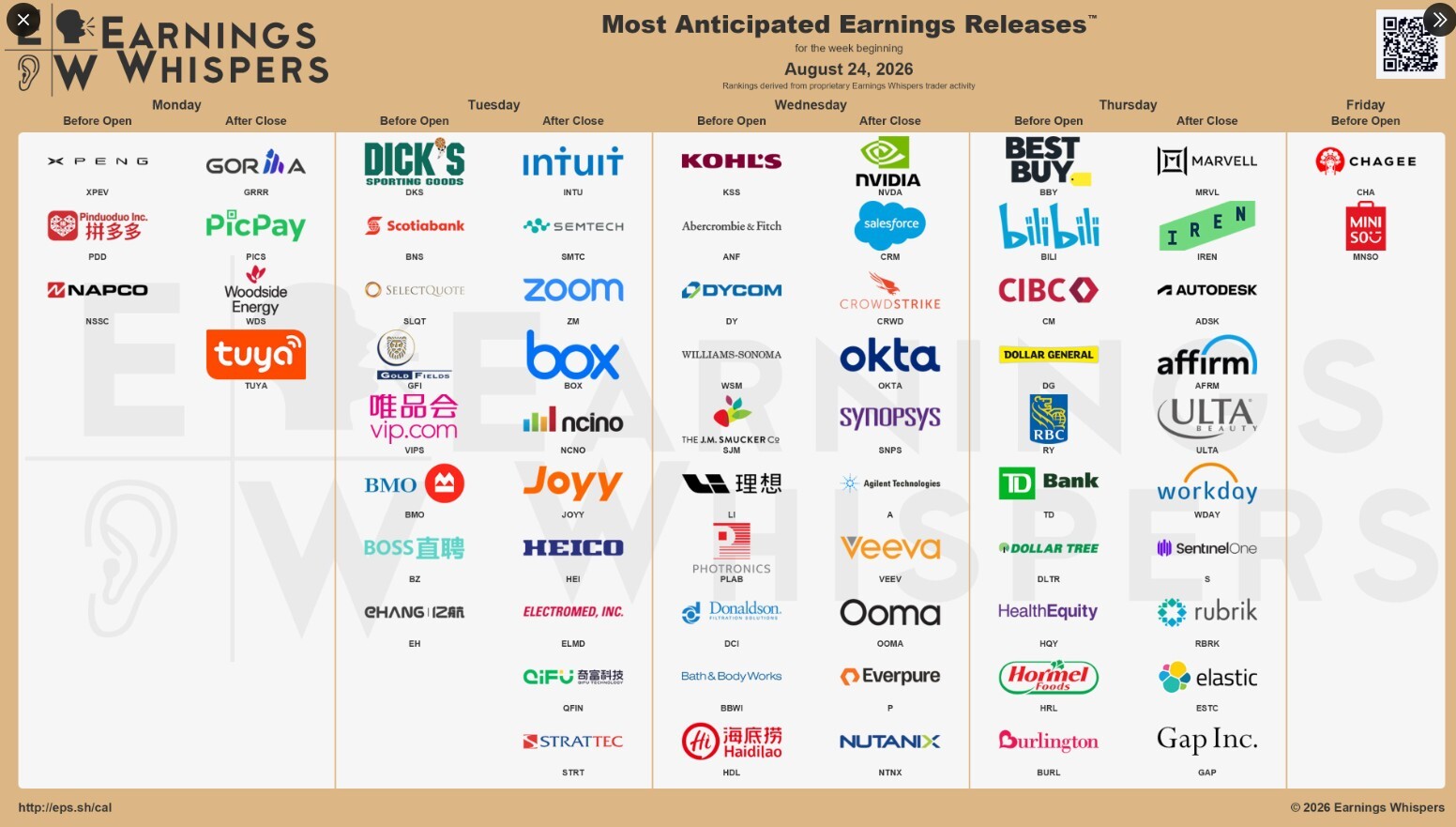
Nvidia’s earnings report and the Federal Reserve’s Jackson Hole symposium (more below) will test the strength behind this year’s stock market rally, offering clues on whether the AI-driven surge in equities can withstand rising uncertainty over growth and interest rates. Investors are waiting for Fed Chair Kevin Warsh’s speech and with Warsh stepping back from traditional forward guidance, investors see the event as another opportunity for him to show eager markets how he intends to approach monetary policy and articulate the framework that will define his long-term strategy.
For the week, the DOW lost -0.9% to 53,277, the S&P 500 shed -1.4% to 7,674, the Nasdaq slumped by -2.1% to 26,180 and the Russell 2000 declined -1.7% to 3,018. The CBOE VIX gained +6.2% to 15.13.

What is So Special About Jackson Hole?
Well – it may be one of the most beautiful places in the entire United States. Besides its beauty, every year participants including prominent central bankers, finance ministers, academic luminaries and leading financial market players from around the world gather in Wyoming to talk shop. The mission of the event is to foster an open discussion. Attendees are selected based on each year’s topic, with additional consideration given to create regional diversity among attendees.
The symposium is sponsored by the Federal Reserve Bank of Kansas City and has been held in Jackson Hole since 1982. Its proceedings are closely followed by market participants, as unexpected remarks emanating from the heavyweights at the symposium have the potential to affect global stock and currency markets.
Each year the Jackson Hole Economic Symposium focuses on an important economic issue facing world economies. This years topic is “Financial Innovation: Implications for Payments and Policy.”
Federal Reserve Chair Kevin Warsh will deliver his first Jackson Hole keynote on August 28, and a section of the analyst commentary is treating it as a higher stakes event than the symposium typically carries, on the view that Warsh could use the platform to hint at where the September 16 rate decision is heading. That expectation sits awkwardly against everything Warsh has actually done since taking office in May.
At both press conferences he has held so far, Warsh has been notably evasive when pressed on his policy thinking. He has shortened the postmeeting statement, curtailed the forward guidance that shaped Fed communication for more than a decade, and told reporters after the July 29 meeting that the Fed operates independently of what markets are pricing. His own description of the Jackson Hole speech reinforces the same posture: he wants it to frame big picture questions rather than offer near term guidance, according to comments made at that same press conference. Read against that pattern, a speech that stays deliberately vague is not a break from form, it is the form.
Eyes and ears throughout the world will be watching and listening intently.

Wall Street Has Spoken
Scott Bessent’s buyback proposal won’t fix the growing problem faced by the federal government when it comes to borrowing costs. A rally in bonds fizzled out and stocks fell on bets the Treasury’s plan to curb the massive expense is just that: a short-term fix.
Thirty-year yields rose even as the Treasury Secretary touted the potential for a bigger buyback in an upcoming fiscal plan. The latest action on Wall Street follows a series of Treasury decisions that have signaled growing concern about rising long-term yields. Government financing costs are trickling down to the broader economy.
Treasury Secretary Scott Bessent said that he’s prepared to expand efforts to buy back costlier debt and that the administration will be unveiling a new fiscal initiative to address the highest borrowing costs in years.
The Treasury chief played down Thursday’s market moves, saying “anything that happens within a 24-hour period is noise.” And he highlighted that the expanded buyback operations “could be more than the $4 billion” size currently planned to start next month. Huh?
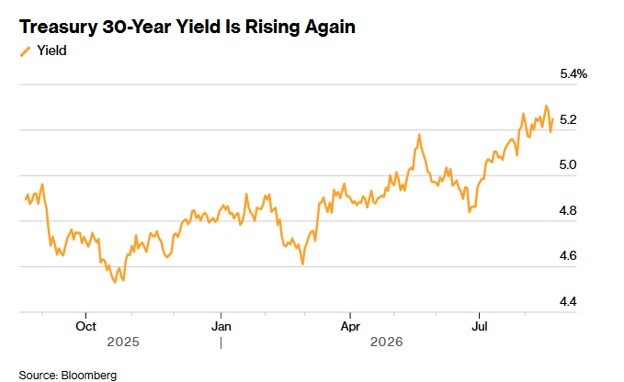
The Treasury intervention showed policymakers are uncomfortable with the pace of the rise in yields, but it does not fundamentally alter the outlook for rates, according to Ulrike Hoffmann-Burchardi at UBS Chief Investment Office.
“The Fed is unlikely to raise rates this year if inflation continues to moderate, although policymakers have retained the option to tighten should price pressures prove more persistent than expected,” she added.
Federal Reserve Bank of San Francisco President Mary Daly suggested the Treasury market is signaling that monetary policy is in a good place right now.
“There’s a lot of discussion about our credibility there. I don’t see our credibility at risk,” Daly told Bloomberg Television. “I also hear a lot about, should we be making preemptive cuts — or hikes, rather? And I don’t see a lot of evidence that that’s an urgent problem to solve.”

RING THE BELL!!!
Last Monday we had the honor of ringing the closing bell at CBOE. This was broadcast live on CNBC and it truly was one of the most exciting times of my professional career.
The best part about it? I had many of my Prosper teammates standing right beside me as well as 15 Prosper students.
Click on the video below to take a look:
Economic Reports of Note (All Times EST):
Monday
11:30 am – US: 3 & 6-month Bill Auction
Tuesday
8:00 am – US: Building Permits
8:00 am – US: FOMC Member Barkin Speaks
8:15 am – US: ADP Employment Change Weekly
8:55 am – US: Redbook
9:00 am – US: House Price Index
10:00 am – US: Conference Board Consumer Confidence
10:00 am – US: New Home Sales
10:00 am – US: Richmond Manufacturing & Services Index
Wednesday
7:00 am – US: Mortgage Data
8:30 am – US: PCE
8:30 am – US: GDP
8:30 am – US: Durable Goods
8:30 am – US: Personal Income & Spending
10:00 am – US: Atlanta Fed GDPNow
10:00 am – US: Dallas Fed PCE
10:30 am – US: Crude Oil Inventories
11:45 am – FOMC Member Barkin Speaks
1:00 pm – US: 5-year Note Auction
Thursday
8:00 am – US: Jackson Hole Symposium Begins
8:30 am – US: Weekly Jobless Claims
8:30 am – US: Wholesale Inventories
11:00 am – US: KC Fed Composite & Manufacturing Index
11:30 am – US: 4 & 8-Week Bill Auctions
Friday
8:00 am – US: Jackson Hole Symposium Continues
8:30 am – CAN: GDP