
RISING PRICES
The Dow, S&P 500, Nasdaq 100, and Russell 2000 all struggled this week, despite a Thursday rebound and an extremely muted triple witching expiration on Friday. Investors digested a Federal Reserve rate hike, a higher 10-year Treasury yield, renewed Iran-related energy risk, and fresh uncertainty around the AI investment cycle.
Geopolitics remains a major market input. Iran-related tensions, disruptions around regional shipping routes, and attacks on Saudi energy infrastructure helped push oil sharply higher early in the week. Crude then pulled back Wednesday and Thursday as reports of additional Saudi supply options eased the immediate shortage fear, helping yields decline and stocks stabilize.
AI added another layer of uncertainty. Reports surfaced that OpenAI delayed its IPO until at least next year after OpenAI and Anthropic leaders called for a slowdown in AI development amid safety concerns. That raised questions about regulation, AI infrastructure spending, and whether the chip-and-data-center boom could face a new policy overhang.
But the focus of the week was the FOMC decision. The Fed raised the target range for the federal funds rate by a quarter point to 3.75% to 4.00%, with a unanimous vote. The statement emphasized that economic activity is expanding at a solid pace, domestic spending remains resilient, productivity growth is strong, capital investment is robust, and inflation remains elevated. The most important sentence was direct: the Committee said it “will deliver price stability,” (more on that below).
For the week, the DOW lost -1.7% to 51,683, the S&P 500 closed lower by -0.1% gain to 7,651, the Nasdaq gained +0.7% to 26,523 and the Russell 2000 slumped -1.5% to 2,860. The CBOE VIX closed lower by -6.5% to 14.81.

HIGHER AND HIGHER (Rates and Prices)
Last week I referenced Tom Petty and The Waiting is the Hardest Part. This week it’s Jackie Wilson and Higher and Higher.
Now let’s talk about both rates and prices. First – it seems like almost everything is getting more expensive. The price of eating out, filling a gas tank and buying a house keeps rising, while higher interest rates add to borrowing costs. Mortgage rates are pushing 7%. Gas prices are near their highest levels since 2022. And we got a Federal Reserve interest rate hike for the first time in three years.
Everything from buying a house to filling up your gas tank now costs more than even a week ago—putting affordability back in the spotlight just before midterm elections that will determine control of Congress.
A robust economy driven in part by President Trump’s tax cuts, reduced regulations and historic AI spending has boosted growth and investment. But tariffs and the data-center build-out have also added to inflation. The war with Iran has set off an energy shock that is raising prices for gasoline, diesel and heating oil.
Consumer prices were up 3.4% from a year earlier in August, extending five years of price pressures on Americans. For five months, wage gains haven’t kept pace with inflation and, especially with the sharp increase in gasoline prices over the past few weeks, they aren’t likely to keep up this month, either. Even those workers whose wages are keeping up with inflation might be feeling irked.
Fed Chair Warsh made the case that taming inflation will most help the least well-off. But costs rise first, and that can be a hard sell for Americans who see all their expenses moving in the wrong direction.

The Fed Ran Out of Reasons to Wait
Fed Chair Kevin Warsh’s press conference reinforced this message. Though he avoided detailed forward guidance he argued that trends matter more than individual data points and that the Fed would not waver in its inflation fight.
The decision to raise rates was a unanimous one – making the “higher for longer” mantra even more in focus. Markets initially sold off because the hike did not look like a one-and-done move. During the week, short-term Treasury yields rose, the 2-year yield remained highly sensitive to additional tightening risk, and the 10-year Treasury yield traded above 5% before easing back below that level as oil prices retreated.
In addition to the hawkish unanimous vote, the updated dot plot and Summary of Economic Projections also leaned hawkish. The median 2026 fed funds projection rose to 4.1%, up from 3.8% in June, while the 2027 median moved to 4.1% from 3.6%. The Fed also lifted its 2026 GDP estimate to 2.3%, lowered its unemployment forecast to 4.1%, raised headline PCE inflation to 3.7%, and lifted core PCE to 3.4%. In essence, the Fed sees stronger growth, lower unemployment, and stickier inflation which presents a mix that keeps additional rate hikes on the table.
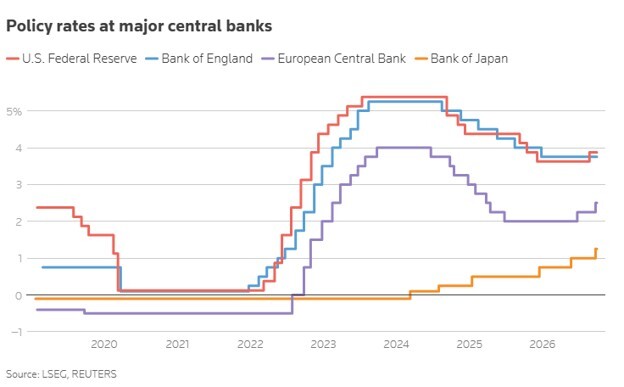
The yield on 10-year Treasurys—a critical driver of long-term interest rates for consumers and businesses – crossed 5% for the first time since 2023 this week. Futures markets indicate there is about a 50% chance of the central bank raising rates again at its October meeting, a week before Election Day. Most Fed officials project one rate increase by the end of the year.
The average rate on a 30-year mortgage climbed to 6.95% over the past week, Freddie Mac reported Thursday. That leaves it just a whisker away from 7%, a level it hasn’t hit since right before Trump took office in 2025. As recently as early 2022, rates were just over 3%.
That could be consequential in congressional races across the country, especially in places where Democrats have made affordability central to their messaging.
Economic Reports of Note (All Times EST):
Monday
6:30 am – US: Fed Member Goolsbee Speaks
8:30 am – US: Chicago Fed National Activity
11:30 am – US: 3 & 6-month Bill Auctions
Tuesday
8:15 am – US: ADP Employment Change
8:55 am – US: Redbook
10:00 am – US: Richmond Manufacturing & Services Index
10:05 am – US: FOMC Member Williams Speaks
10:20 am – US: Fed Governor Jefferson Speaks
1:00 pm – US: 2-year Note Auction
1:00 pm – US: FOMC Member Barkin Speaks
Wednesday
7:00 am – US: Mortgage Data
9:45 am – US: S&P Global Composite, Manufacturing & Services Index
10:05 am – US: Fed Vice Chair Barr Speaks
10:30 am – US: Crude Oil Inventories
1:00 pm – US: 5-year Note Auction
Thursday
7:50 am – US: Building Permits
8:30 am – US: Weekly Jobless Claims
10:00 am – US: New Home Sales
11:00 am – US: KC Fed Composite & Manufacturing Index
11:30 am – US: 4 & 8-Week Bill Auctions
1:00 pm – US: 7-year Note Auction
Friday
8:30 am – US: Durable Goods
10:00 am – US: Atlanta Fed GDPNow
10:00 am – US: Michigan 1 and 5 year Inflation Expectations
10:00 am – US: Michigan Consumer Sentiment