June 5, 2019

The Relationship Between Gold and the US Dollar

Gold has a dual role as both a commodity and a currency. As a commodity, there are numerous industrial applications that give the precious metal intrinsic value. As a currency, it can be used as a method of wealth transfer or even as a hard currency in itself (no pun intended). Since gold is traded in US Dollars, gold can also act as a proxy currency trade. As a rule, when the value of the dollar increases relative to other currencies around the world, the price of gold tends to fall in U.S. dollar terms. It is because gold becomes more expensive in other currencies. As the price of any commodity moves higher, there tend to be fewer buyers, in other words, demand recedes. Conversely, as the value of the U.S. dollar moves lower, gold tends to appreciate as it becomes cheaper in other currencies.

Gold also is tied to interest rates. When interest rates move higher, the price of gold tends to fall, since it costs more to carry the metal. In other words, other assets (such as stocks) will command more demand because of their interest rate component.

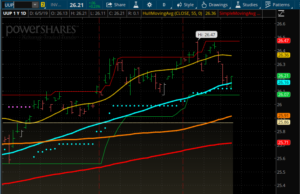
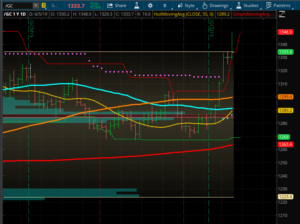
You can see this relationship between Gold and the US Dollar in the charts below.

Follow me on Twitter @MikeShorrCBOT
about the author:

Mike Shorr

Since 1994, Michael has been an on-the-floor market maker, Vice-President of Interest Rate Derivatives for Knight Financial Products and Director of Education and Options Instructor at Trading Advantage. He makes the oftentimes complex world of options and trading accessible to the novice and advanced trader alike. Michael has a Bachelor of Science degree in Statistics and Finance from the University of Illinois Champaign-Urbana. He presently is Director, Trader Education at ProsperTradingAcademy.

Read Similar Articles

September 20, 2026

The Week Ahead: RISING PRICES

RISING PRICES The Dow, S&P 500, Nasdaq 100, and Russell 2000 all struggled this week, despite a Thursday rebound and an extremely muted triple witching expiration on Friday. Investors digested a Federal Reserve rate hike, a higher 10-year Treasury yield, renewed Iran-related energy risk, and fresh uncertainty around the AI investment cycle.  Geopolitics remains a major […]

Read Article
https://www.prospertrading.com/scott-bauer-ikbr-091626/The Fed Rate Hike: What Investors Should Know
September 18, 2026

The Fed Rate Hike: What Investors Should Know

Scott Bauer joins the IBKR Podcast to break down what matters most after the Fed’s latest hike, from Warsh’s tone to housing data and the October hike probability.

Read Article
September 13, 2026

The Week Ahead: NEVER FORGET

Markets shifted decisively during the week from an AI capex earnings-driven backdrop to a more macro-driven and uneven tape. Rates, inflation, petroleum, and Federal Reserve expectations moved back to center stage, with all major equity indexes under pressure. The biggest market driver was the renewed surge in crude oil. Heading into what is likely to […]

Read Article

Read Similar Articles

July 15, 2026

The Fed, Oil, and What Earnings Season Really Means

Scott Bauer joined the IBKR Podcast this week to break down what moved markets last week and what investors need to watch heading into the next stretch of earnings season. From lagging inflation data to big tech CapEx concerns, Scott did not hold back.

Read Article
July 5, 2026

The Week Ahead: Happy 250

The Dow rose more than ​1% to a record closing high on Thursday ahead of the long holiday weekend as a softer-than-expected U.S. ‌jobs report eased worries about interest rate hikes, while another sharp drop in chipmaker stocks weighed on the Nasdaq. The second half of 2026 kicked off this week much the same as […]

Read Article
June 28, 2026

The Week Ahead: Darn Inflation

A renewed sell-off in technology stocks grabbed headlines this week. The Nasdaq index fell 4.5%, closing lower 5 days in a row, led by a large 5.5% decline in the so-called Magnificent 7 mega cap names. Meanwhile, the post IPO exuberance around SpaceX appears to be fading, with shares now down 25% from their peak. […]

Read Article